+16.2% uplift after
business-driven redesign

Management Summary

Three quarters of companies are dissatisfied with their redesign. The reason: Classic large-scale redesigns can lead to unintended changes in user behavior and trigger revenue drops.

As part of a brand refresh, the online shoe store of Hamburg-based Ludwig Görtz GmbH also faced a redesign.

With our agile, data- and user-driven optimization approach, we made the redesign of the online store low-risk and time-efficient and achieved a cumulative uplift of 16.2%. This case study shows our method.


Challenges and solution

The challenge: a major change to the brand image

In 2016, GÖRTZ fundamentally shifted its brand image from black to white. The online store was affected too and therefore faced a redesign. konversionsKRAFT supported the company through its redesign, averted every risk, and generated a double-digit cumulative uplift.

Header, old color scheme

Header, new color scheme

Mistakes in optimization can cause revenue drops

Data-driven decisions reduce the risk of errors, even in redesigns. Instead of worrying about things getting worse after a redesign, validated design decisions can even have a positive impact on revenue.

Many companies turn their redesign into a single large project with complex processes and no measurable goals. A new design has to happen, and gut feeling decides what might resonate with customers and could drive up the conversion rate.

That is why we examine the possible effects on conversions through A/B testing before a changeover. In GÖRTZ's case, this uncovered the different questions and problems of the redesign adjustments early on.

Disillusionment often sets in when the conversion rate drops after the redesign. Results only become visible after the project ends. Cause and effect of individual changes are hard to trace. As a result, only a quarter of companies are satisfied with their redesign at all.

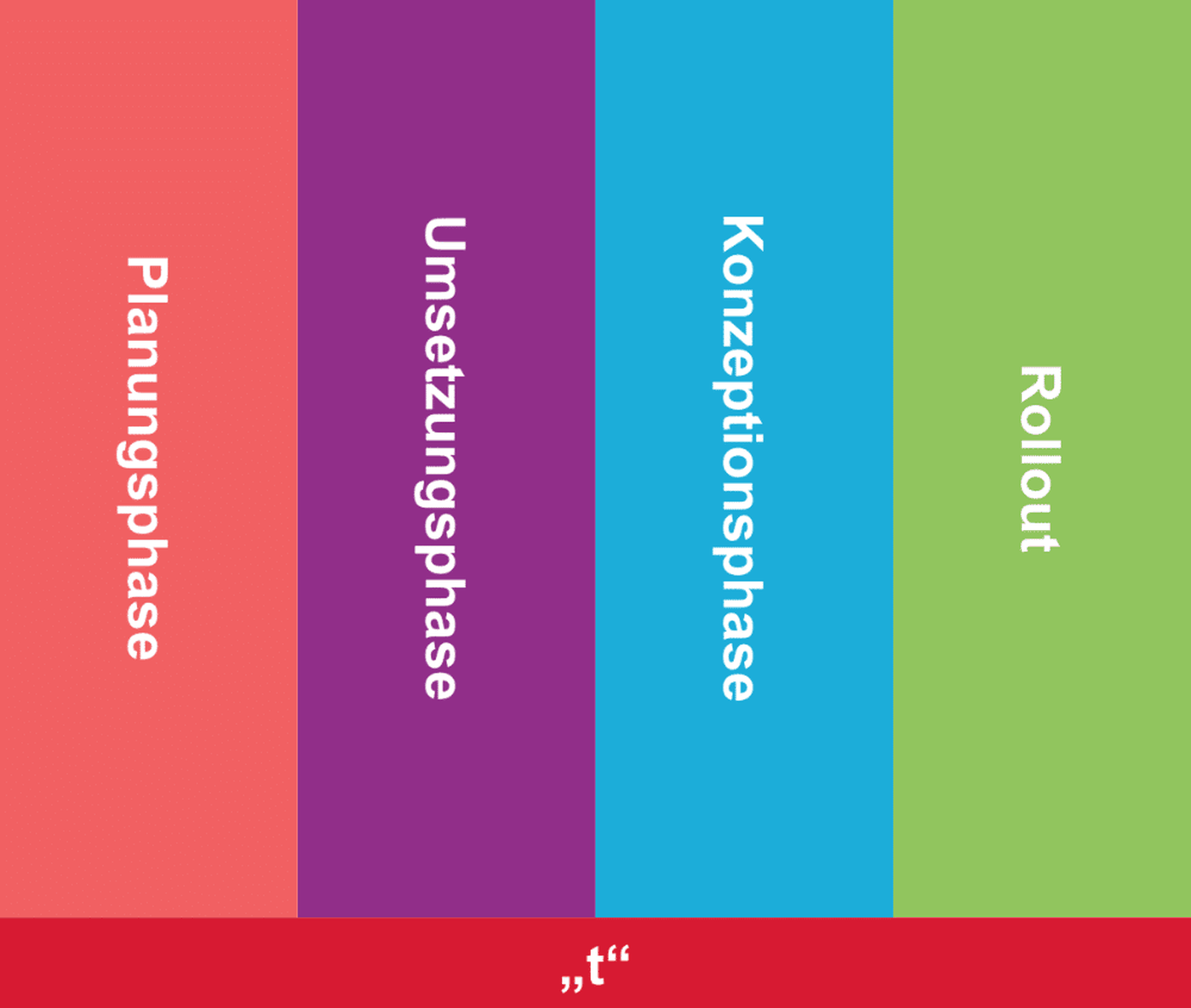
The classic approach

Drawbacks of the project process

In companies that treat redesigns as a large project and make decisions by gut feeling, it helps to rethink. Instead of putting a website through a complete redesign every few years, we recommend setting up an agile culture of continuous optimization.

High complexity puts project success at risk

Cause and effect of individual measures remain unclear

Adjustments caused by unavoidable planning errors delay the entire process

Project success can't be planned or steered

Success can only materialize after the overall project is complete

The solution & benefits

Business-driven redesign in agile sprints

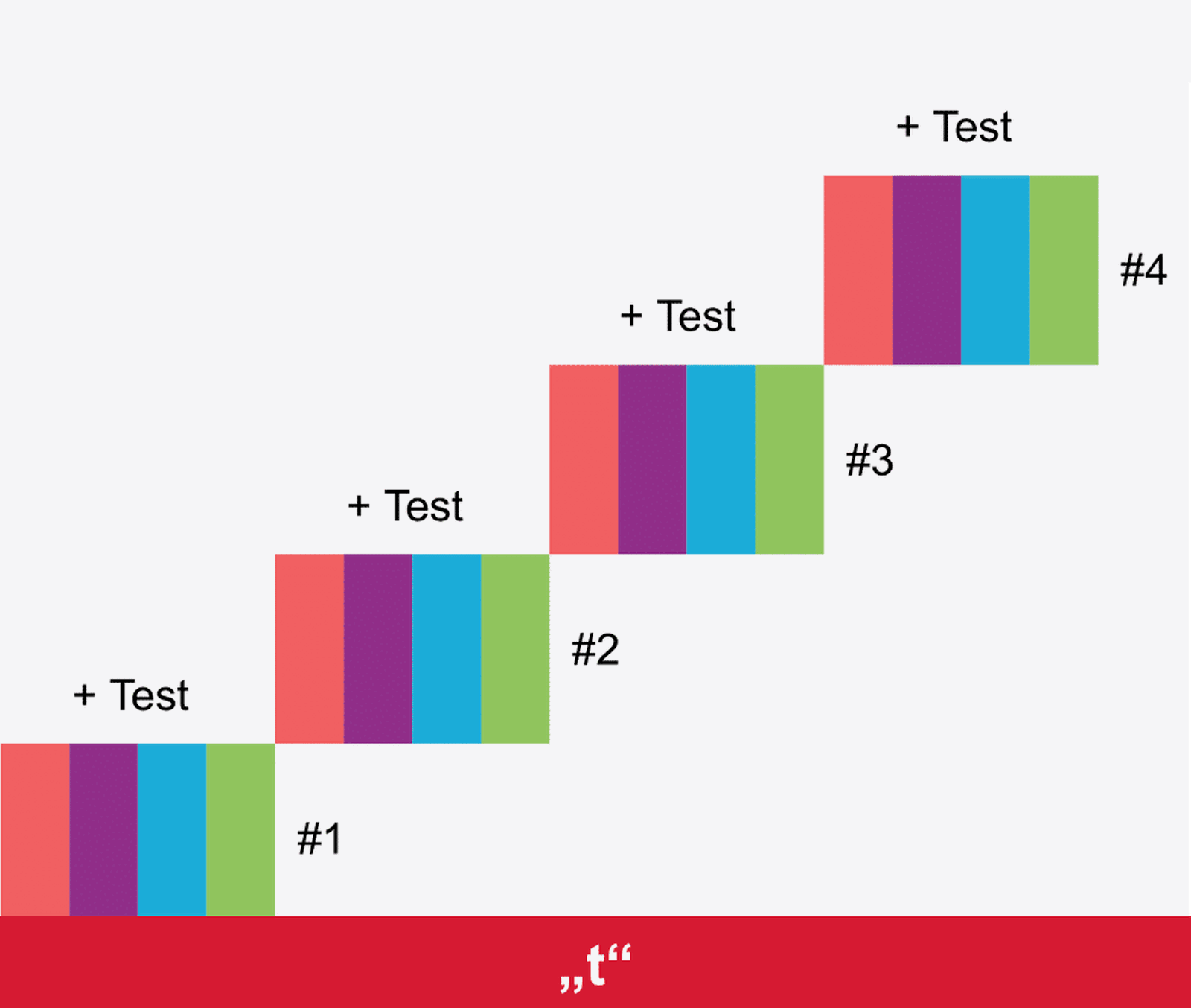
To reduce the complexity of a redesign, we changed the GÖRTZ website step by step in agile testing sprints. This let us look at individual components in isolation and see how each affects user behavior and the shopping experience in the online store.

Less complexity by breaking the project into individual steps (sprints) with the goal of increasing conversion

Isolating individual components shows their influence on key metrics

Shorter planning phases lower the risk of errors

Predictable project success through testing (only winners get implemented)

Early wins, because winning variants roll out right away

Goals of the data-driven design adjustments

A sketched sparkling diamond

Uncovering ROI and revenue potential

A shield icon with a checkmark in the middle

Confidence in implementation and at go-live

A sneaker mimicking a running motion with 3 speed lines behind it

Agile processes, stakeholder management, and target-audience fit of the design adjustments

Practical implementation

For redesigns to be systematically broken down rather than driven by chance, they need a valid data foundation. It's also about understanding your own buyer groups, and the structure of the 7 Levels of Conversion helps with that.

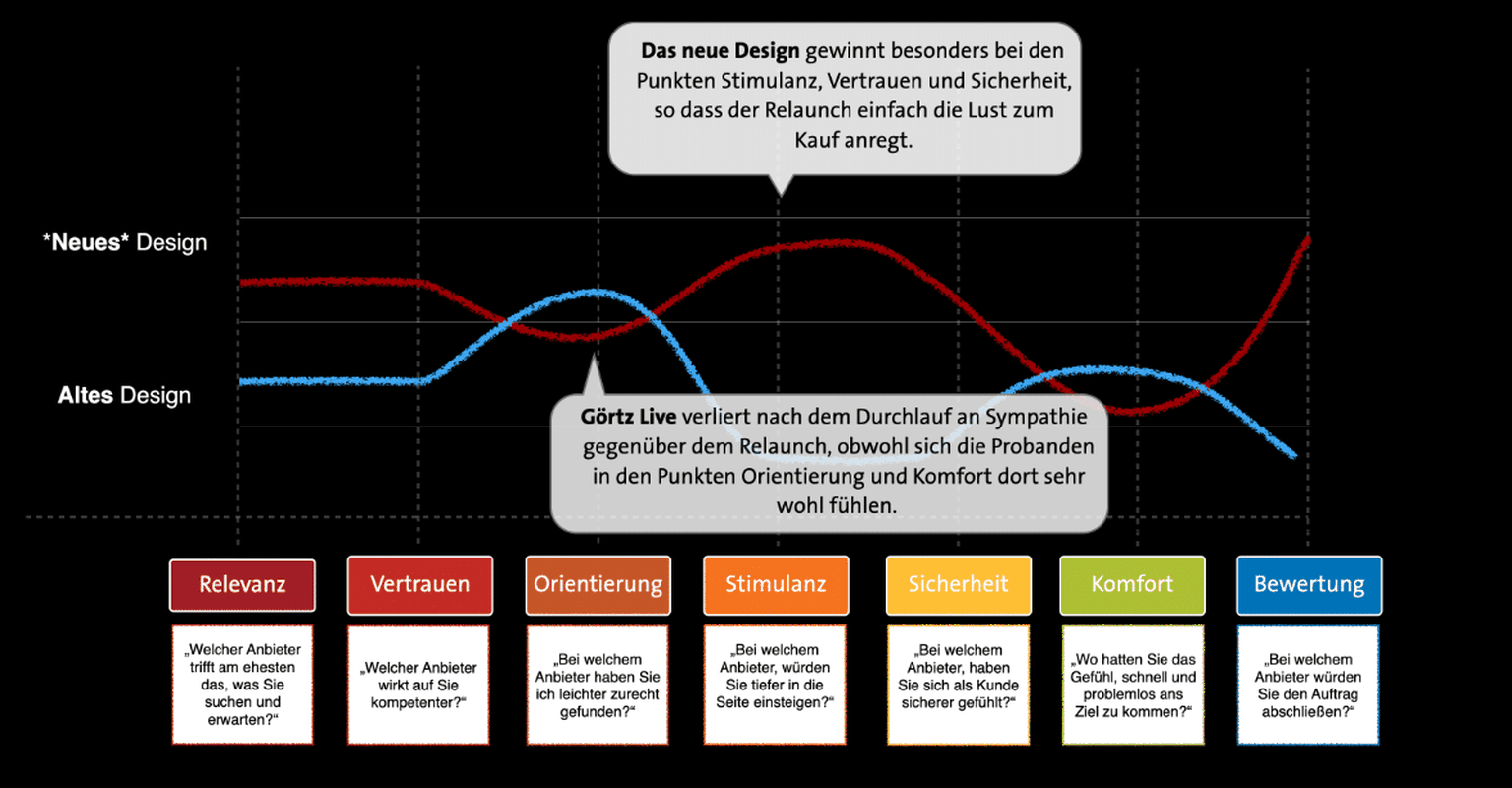
Comparison of Görtz's old (blue) and new (red) website design based on user ratings in seven categories: relevance, trust, orientation, stimulation, security, comfort, and final rating. The new design scores higher on stimulation, trust, and security, while the old design scores better on orientation and comfort. Two speech bubbles summarize the differences.

A user survey produced a motivation curve based on the 7 Levels of Conversion. We systematically analyzed the different phases of the buying process to gauge the strengths and weaknesses of the designs and gain more confidence in implementation.

Thanks to testing integrated into the redesign process, adjustments to the design, product detail pages, and overview pages were validated and optimized right away.

Example: Content testing of unique value propositions (UVPs)

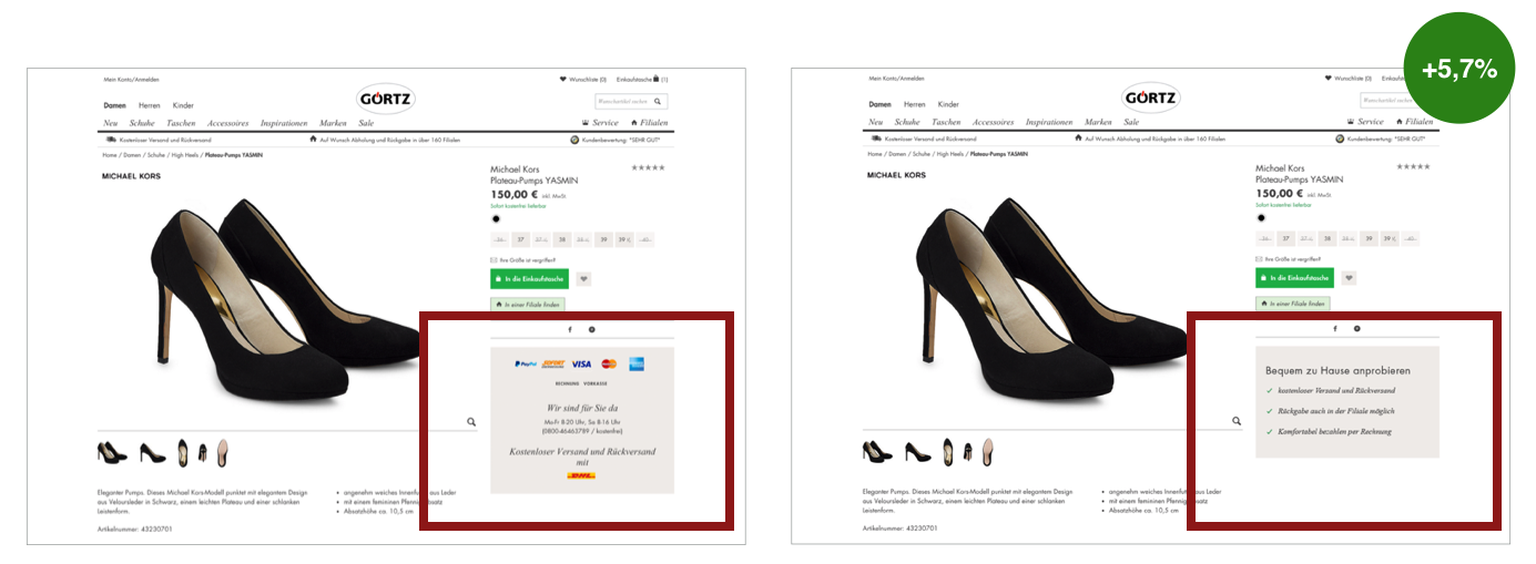
Where the control (left) showed the payment and shipping options, the variant (right) placed a box with unique value propositions.

Two product detail pages of the Görtz online store in an A/B test comparison. On the left, the original version with standard payment and shipping information; on the right, the optimized variant with more emotional benefits ("Try on comfortably at home"). The new variant achieved a conversion uplift of +5.7%.

The result: The hypothesis was confirmed. Despite the change in brand image, adding the UVPs increased revenue significantly by +5.7%.

That is why we accompanied all optimization sprints with A/B tests. This uncovered risky variants (learnings/validation).

Successful variants were rolled out right away. This gave us predictable project success. The method also saved time on the overall project.

Project successes at a glance

Thanks to A/B testing, the change of color scheme in the redesign was validated. The data gave a clear basis for decisions through insights into how the color change and further optimizations affected user behavior.

By gradually adapting the online store through agile testing sprints, GÖRTZ achieved a cumulative uplift of 16.2% despite a major change in brand image.

Hand-drawn winding path with ten red dots and a finish flag at the top

Successful change of brand image

Görtz's brand image was tested, optimized, and validated step by step during the relaunch.

Three vertical bars growing from left to right with a magnifying glass

Clear basis for decisions through data

Every color change and every layout adjustment was guided by consumer psychology and backed up with data through A/B testing.

A shield icon with a checkmark in the middle

-8.7% loss avoided

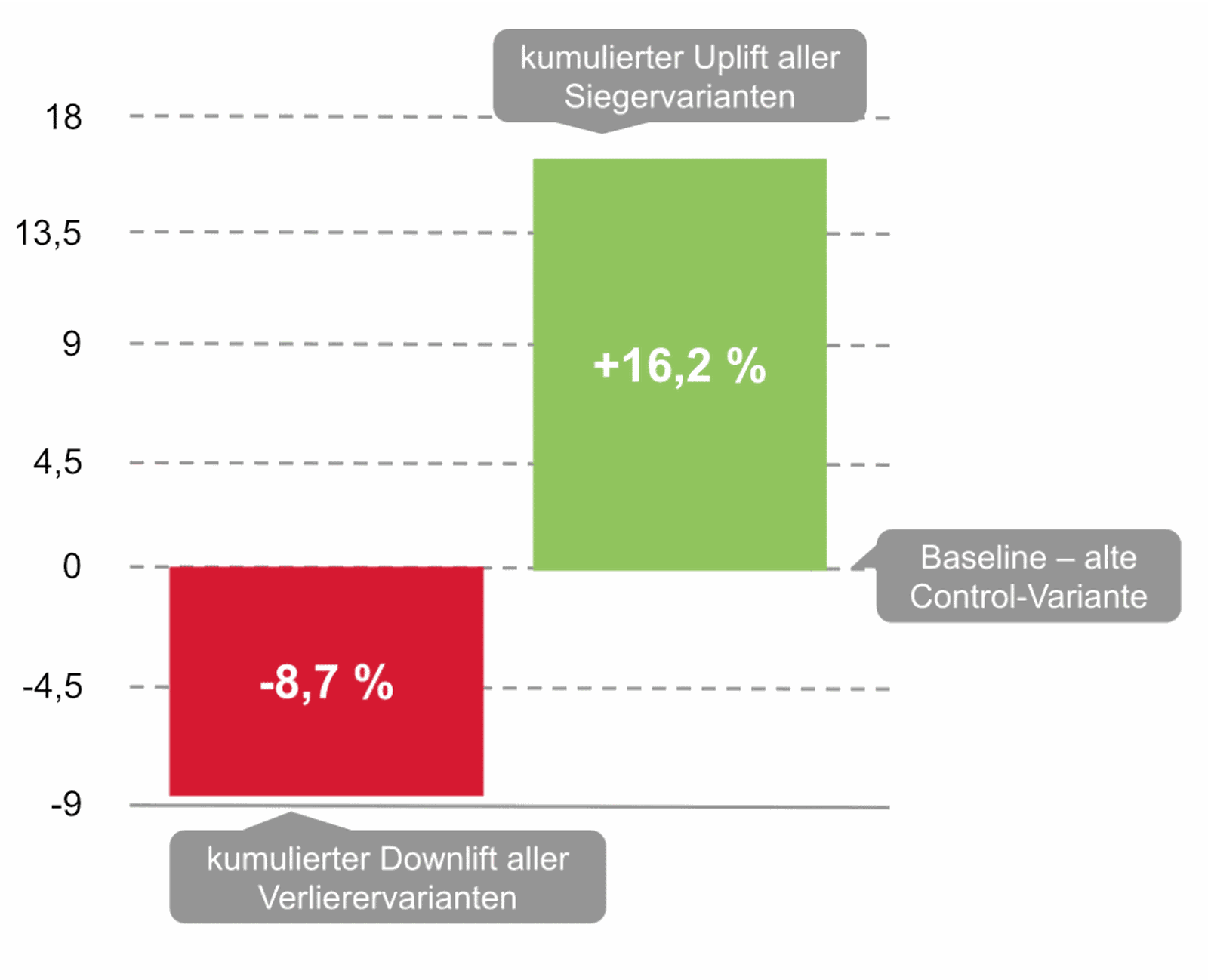
A/B testing all variants let us avoid a total downlift of -8.7% on orders.

Trophy with a star in the middle

+16.2% uplift across all variants

With its agile approach, the business-driven redesign delivered a cumulative uplift of +16.2% on orders.

Bar chart showing the cumulative effect of a redesign: The winning variants achieve a total uplift of +16.2%, while the losing variants cause a downlift of -8.7%. The baseline is the old control variant.

How did konversionsKRAFT strengthen GÖRTZ?

1. From gut feeling to data-driven decisions in the redesign process

2. Confidence in implementing necessary adjustments

3. Lower risk of errors through A/B testing and validation

4. Greater overall success through business-driven redesign

Interested in a consultation or more references?

Gabriel Beck, Member of the Executive Board

Gabriel Beck

Member of the Executive Board

Does our way of thinking resonate with you? Then we should work together.

Send us a no-obligation inquiry and tell us how we can support your mission. We'll get back to you within 48 hours.

Weitere Case Studies aus verschiedenen Branchen

The Female CompanyD2C

Rapid Growth Engine

+54%

Conversion rate in three months

Three experiments per week, the first after 13 days.

AI delivers customer understanding and tests in days instead of weeks. 59% of experiments win; the benchmark is 20 to 30%.

Case lesen 6 Min.
computeruniverseElectronics

Personalization

+18.2%

more revenue

Recognizing customer types before anyone logs in.

From 200 data points, a profile of each visitor emerges in real time. The messaging adapts long before checkout begins.

Case lesen 4 Min.
hessnaturFashion

Personalization

> +10% RPV

in 4 weeks

From tool to first personalization in four weeks.

A few clearly justified use cases instead of hundreds of possibilities. All three first experiences beat the control group.

Case lesen 3 Min.
Well-known German fashion brandFashion

Conversion optimization

+€44.88 million

Net revenue in three years

Customers preferred buying in the store. That became a test.

A Motivation Lab showed why customers hesitate in the shop. From that grew a program of 50 to 60 experiments a year.

Case lesen 5 Min.
freenetTelecommunications

Conversion optimization

+30%

more orders, cumulative

Two thirds of all tests successful, with a success guarantee.

A proof of concept with uplift targets agreed in advance proved the value of experimentation. Today freenet runs the program itself.

Case lesen 4 Min.
air upD2C

Customer centricity

7 jobs

Purchase motives built into the product

Seven purchase motives that reached all the way into the packaging.

Ten jobs-to-be-done interviews revealed what turns first-time buyers into repeat customers. air up used the results in shop, product, and service.

Case lesen 5 Min.
KICKZSneakers & streetwear

Customer retention & loyalty

+22%

more contribution margin

More orders don't automatically mean more profit.

We followed A/B tests all the way into the merchandise management system. The variant with 43% more orders still delivered 22% more contribution margin after returns.

Case lesen 4 Min.
International vacation rental providerTravel

Customer centricity

+15.3%

Revenue per visitor

The same page won in Germany and lost in Switzerland.

One template for 15 country shops hid opposing effects. A dedicated concept for Switzerland delivered 15.3% more revenue per visitor there.

Case lesen 4 Min.
HaufeB2B software

Customer centricity

+€5.2 million

Revenue

Personas that get used in daily work instead of sitting in a folder.

Personas and jobs to be done led to 33 tests with a 52% success rate. That made customer centricity part of the daily work.

Case lesen 6 Min.
E.ONEnergy

Personalization

4 streams

along the customer journey

Electricity is the same for everyone. Customers are not.

A vision of a personal customer journey became three customer types, four prioritized streams, and a five-phase roadmap.

Case lesen 6 Min.
Mid-sized fashion D2C brandFashion D2C

Conversion optimization

+€22.8 million

Value contribution per year

Growth in a saturated market, without more ad budget.

Our experts supplemented the in-house team. Today, every important decision is tested first.

Case lesen 3 Min.
GörtzShoes

Redesign validation

+16.2%

Uplift after the redesign

A redesign that brings in revenue instead of costing it.

Every major change was checked in an A/B test before going live. That turned the risk of a relaunch into a measurable gain.

Case lesen 5 Min.
Pferdesporthaus LoesdauEquestrian sports

Rapid Growth Engine

1,493%

ROI in two years

Four times as many tests, because small sprints learn faster.

As an external growth team, we increased the speed and hit rate of testing. Out of that came our model for fast testing in D2C.

Case lesen 4 Min.
BetzoldSchool supplies

Personalization & MVP

+32%

higher conversion rate

An MVP in two weeks instead of a major project.

Concept and shop module were each built in one week. After five weeks of testing, the benefit of the new personalization was proven.

Case lesen 6 Min.
ALDI SÜDGrocery retail

Personalization

3 segments

per channel as a starting point

Personalization across all channels with one shared plan.

Each channel got its own roadmap with prioritized use cases. Dependencies between channels are now visible and plannable.

Case lesen 5 Min.
Online retailer for electronicsElectronics

Online marketing

+6.7%

Purchase interest from the stronger motif

Test in a panel first, then run the campaign.

Motifs and messages of a large image campaign were compared with the target audience in advance, including across markets.

Case lesen 3 Min.
Thomas SaboJewelry D2C

Conversion optimization

> €4.5 million

Additional revenue 2017 to 2019

More orders, because the shop removes doubt.

A MotivationLab showed what makes jewelry buyers uneasy online. The strongest levers came from consumer psychology and were proven in A/B tests.

Case lesen 5 Min.